

How Can You Clean Up Oil Spills
vii most mutual methods for oil spill clean-upwards
Oil booms, skimmers or sorbents. In this article we will discuss the most used methods to clean upward oil spills at sea.
The so-chosen sorbents act like a sponge that soaks up the oil. In-situ called-for was employed during the Deepwater Horizon drilling site explosion. In this article we will hash out the most used methods to clean up oil spills at ocean.
Oil booms
Did y'all know that 1 3rd of the earth's oil comes from offshore drilling sites? While nearly offshore rigs never run into any problems, on occasion impairment to either the structure or drill itself results in oil spilling into the body of water.
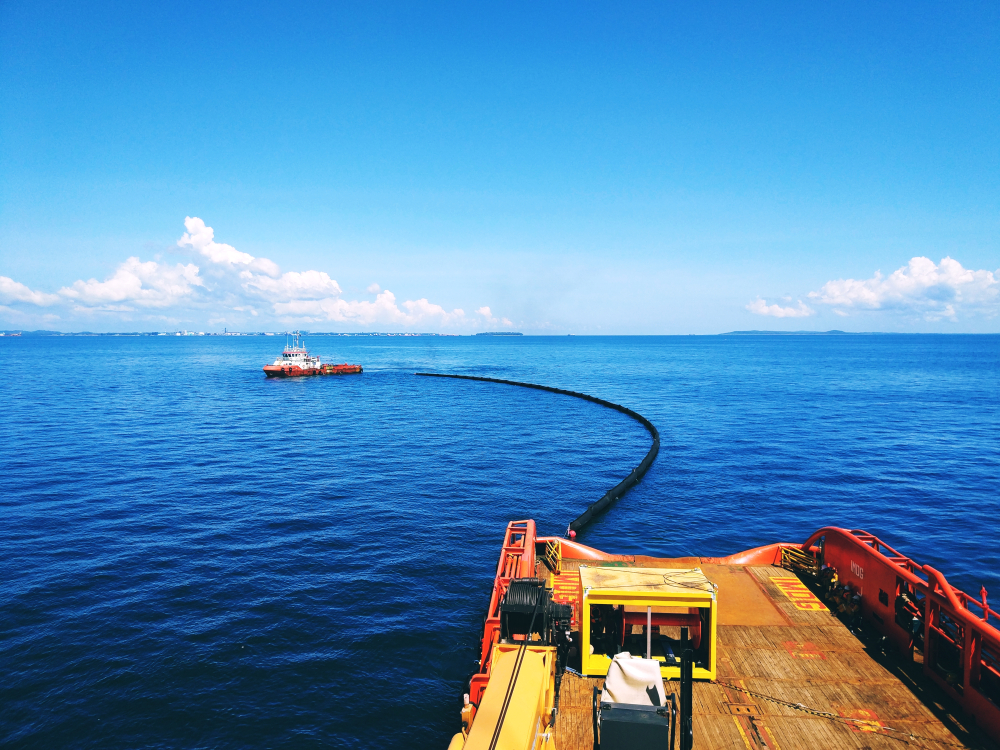
Oil booms are large devices used to collect the spilled oil.
In these cases the oil booms can salve the situation past trapping the oil. They feature three main components: a freeboard for trapping the oil ascension above the water surface.
The 2nd component is chosen a "brim" placed under the freeboard below the water surface which acts as the bulwark wall.
Permit's not forget a chain or cable that connects the parts to strengthen and stabilize the nail.
By the mode, the booms cannot exist used everywhere. This device is suitable to remove oil spills from a single area. The more than oil is spilled in the ocean, the less constructive is the method.
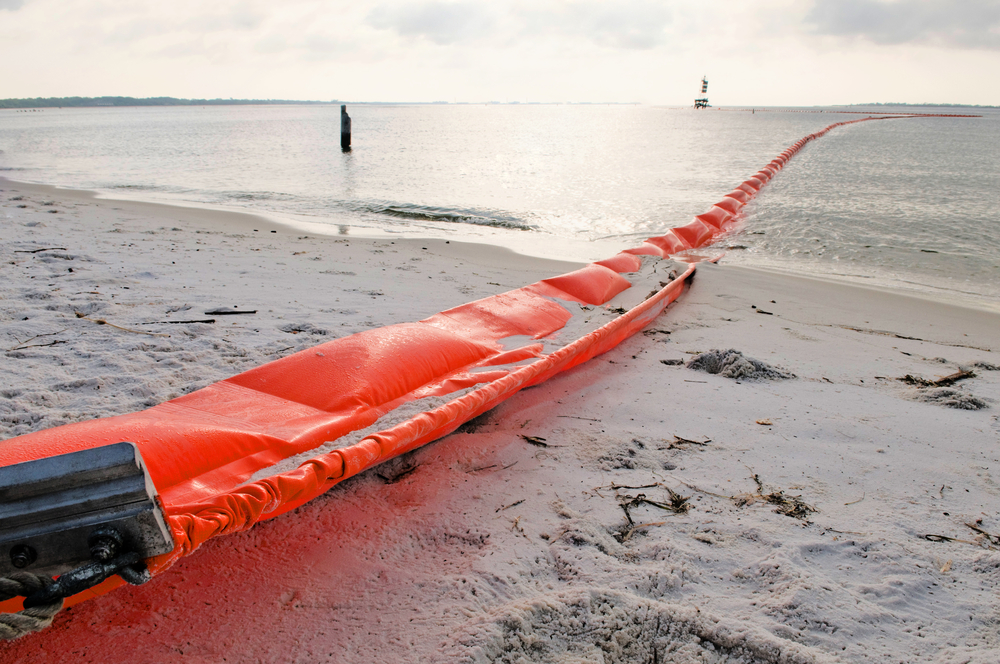
Oil booms are likewise non suitable for areas with strong waves, windy conditions, and potent tide. In conclusion, booms come up in different sizes since their apply depends on the size of the spill.
Sorbents
The word sorbent might sound unfamiliar. We volition provide you with its meaning. When the oil is spilled in the bounding main, two types of sorbents can be used to make clean up the spill. The absorbents that soak up the oil and the adsorbents that do not soak up the oil but class a layer on the surface instead.
Materials usually used equally oil sorbents are straw, corncob, or peat moss. Their advantage is their organic nature. The disadvantage is they absorb merely 3 to fifteen times their weight.
Synthetic materials, with their capacity to blot lxx times their weight, are better sorbents. Researchers at Argonne National Lab have adult an even more effective material that can blot upward to ninety times its weight in 2017. Unlike natural sorbents, which tin can be used only one time, this "sponge" made of polyurethane foam can exist reused.
The sorbents, just like the oil containment booms, also take several disadvantages, such equally that they are difficult to retrieve. In the worst-case scenario, the sorbents might sink nether its own weight and pose a risk to aquatic life.
Skimmers
If the oil cannot exist soaked upwards, skimmers mounted on the edge of the gunkhole are adjacent to be deployed. These devices are specially designed to suck up the h2o from the water surface.
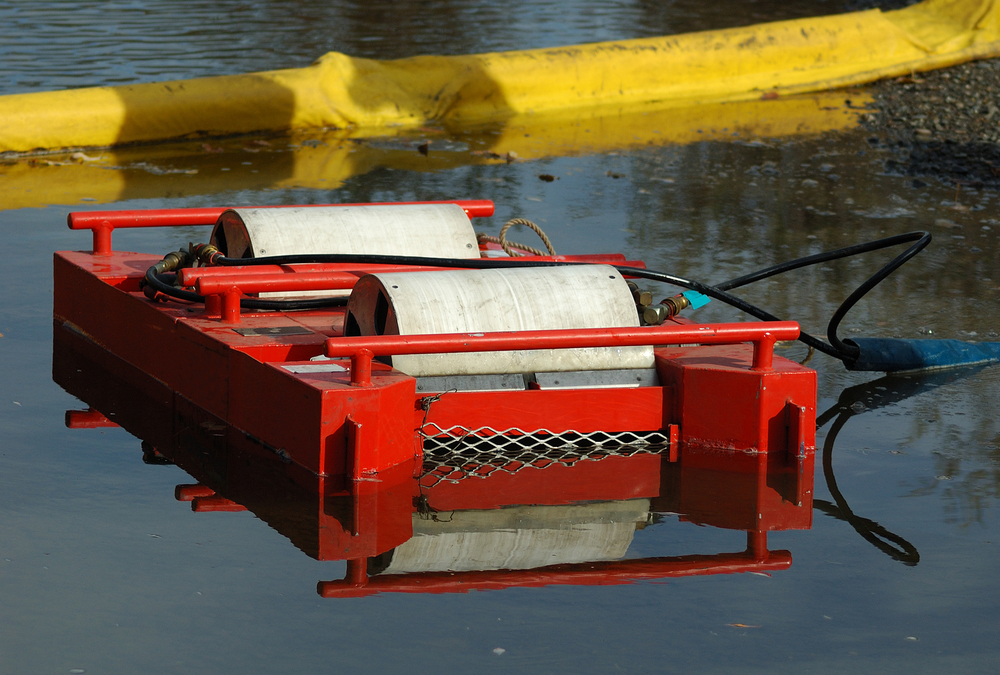
Case of a skimmer
Fifty-fifty better, they can separate the water and oil, making the oil re-usable. Equally for the disadvantages, the presence of debris prevents their use equally they can get clogged, and thus become unusable.
High-pressure washing
This method serves the purpose of "flushing" rather than cleaning the h2o. Imagine a water heater that heats upwardly the water to 170°C. The hot water is then sprayed with high-pressure nozzles on areas with trapped oil.

The pressure flushes the oil to the water surface which tin can be nerveless with skimmers or booms. This process is mainly applied in situations where the oil is inaccessible to larger machinery, such as on the beach.
It is not the best option for seas since the high pressure could disperse the oil, contaminate make clean water with oil, and put the marine life in danger.
In-situ burning
The Gulf of Mexico Oil Spill on the Deepwater Horizon drilling site occurred in 2010. The in-situ burning has been used to remove the oil. The procedure is easy: the oil floating on the surface is ignited to burn it off. The called-for is subject to strict supervision.
In-situ burning is much more effective compared to other methods of oil spill clean-up. It tin can remove upwards to 98% of oil.
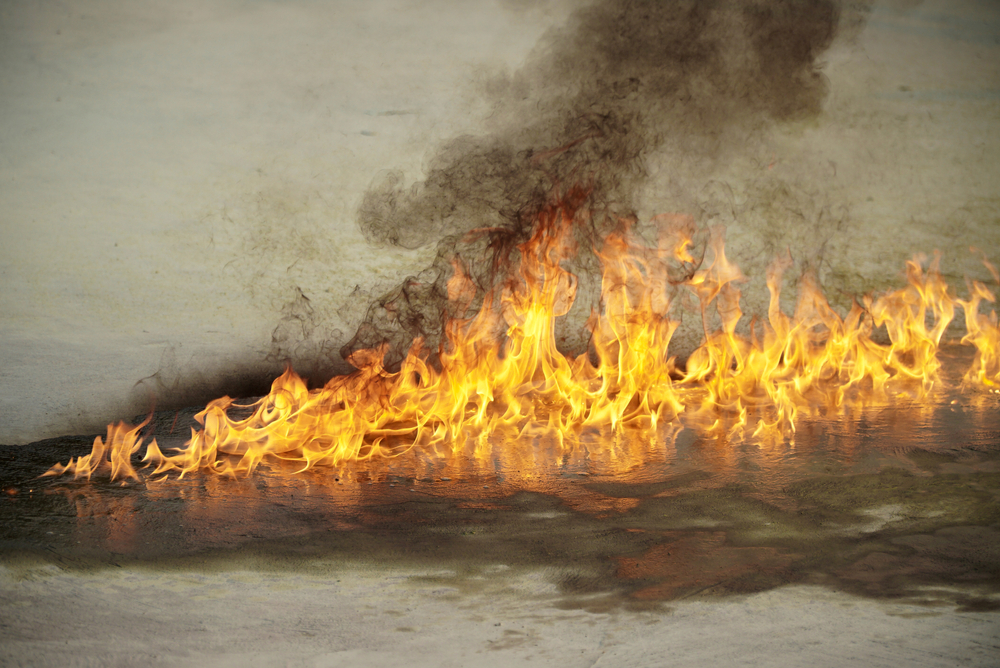
However, it cannot be used at every accident. The spill thickness must be at least 3mm on the surface to be burned. Thinner layers are more than difficult to remove, sometimes fifty-fifty impossible. Unfavorable weather conditions are likewise non compatible with the in-situ burning.
Gelatin treatment
Gelatinizing is the procedure of applying agent in powdered form to oil spills on water.
The chemical compound confines the oil and creates a more solid gelatin, and thus separates the oil from water. The oil-gelatin compound is later collected by nets and skimmers.
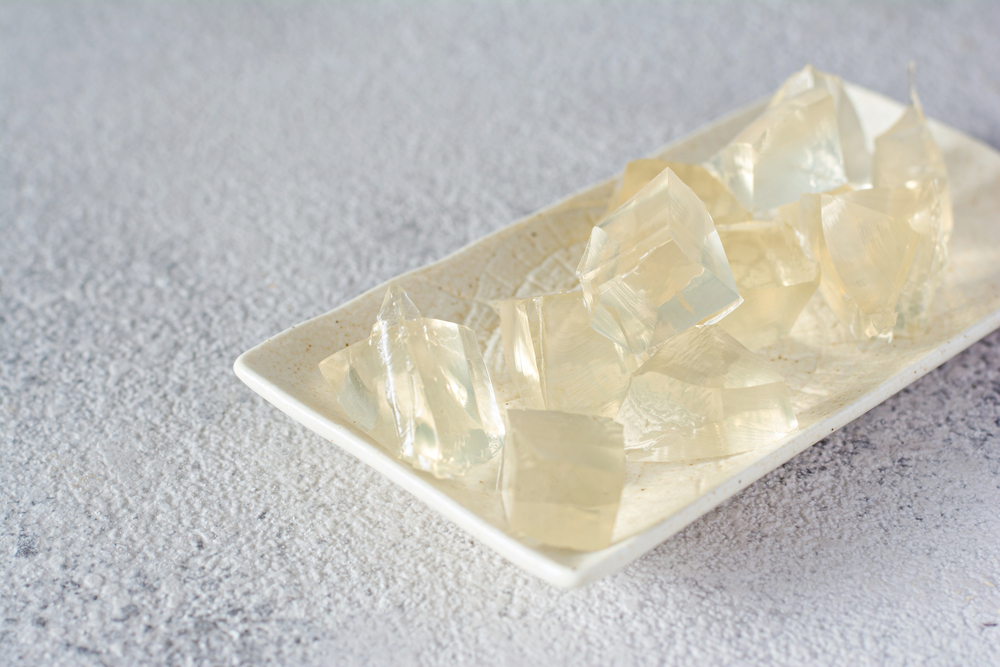
This method is constructive, withal difficult to apply. The oil and gelatin ratio is 1:3 which means y'all need iii times the amount of gelatin to remove the oil. For some accidents this is not possible.
Bioremediation
Bioremediation is the last method of oil spill clean-up which we cover today. It is based on the utilize of specific microorganisms released to the h2o, such as leaner, algae and fungi.
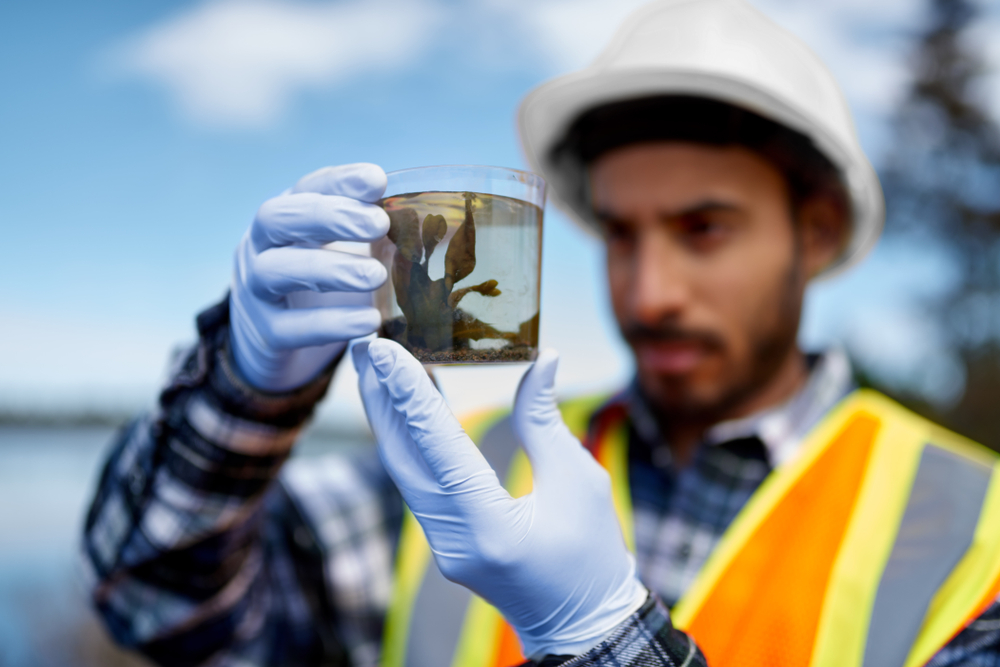
Their purpose is to break the oil into simpler and non-toxic molecules. In order for the method to be as effective as possible, the fungi or algae should be equally big equally possible. Reagents and fertilizers can exist added to the contaminated water to facilitate the growth of the higher up.
Hydrotech does not specialize in oil spills removal, withal, wastewater handling is our field of expertise. Farther data about our solutions are available on our official website.

Source: https://www.hydrotech-group.com/blog/7-most-common-methods-for-oil-spill-clean-up
Posted by: dillwhount.blogspot.com
0 Response to "How Can You Clean Up Oil Spills"
Post a Comment